Design in Dialogue: How an Island Resort Sharpened My Design Philosophy
By Albina Hunt, Founder & Principal Designer, Albina & Co. Location: Koh Yao Noi, Phang Nga Bay, Phuket, Thailand
Filed under: Design Inspiration | Material Philosophy | Biophilic Design | Albina's Eye
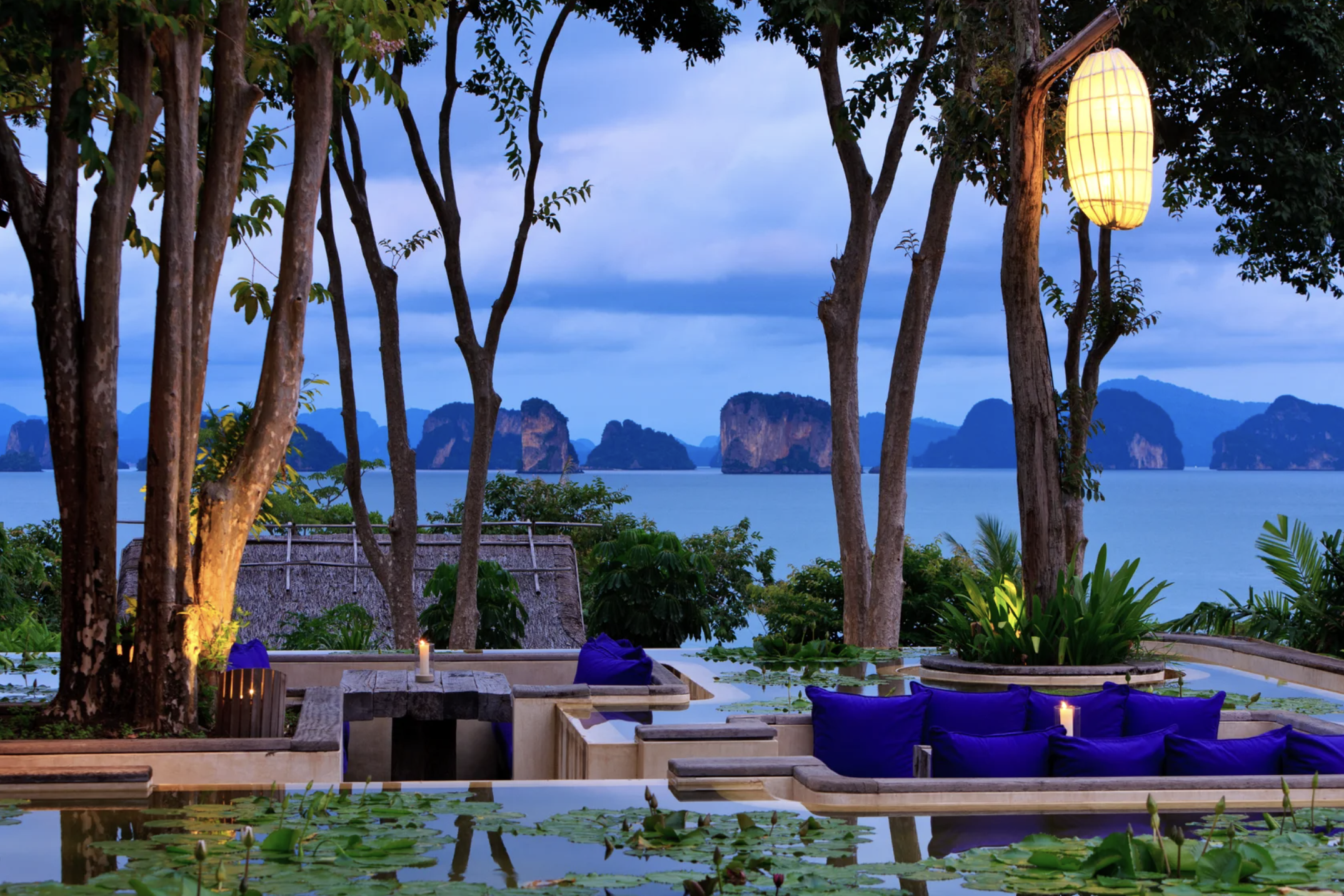
There is a principle that guides every project at Albina & Co.: design in dialogue — designing with a space, not onto it. The idea that a designer's role is not to impose a vision, but to listen to what is already there and enhance rather than override it. My week at Six Senses Yao Noi, on a small island in Phang Nga Bay, Phuket, Thailand, clarified that principle completely.
A Place Built From Where It Stands
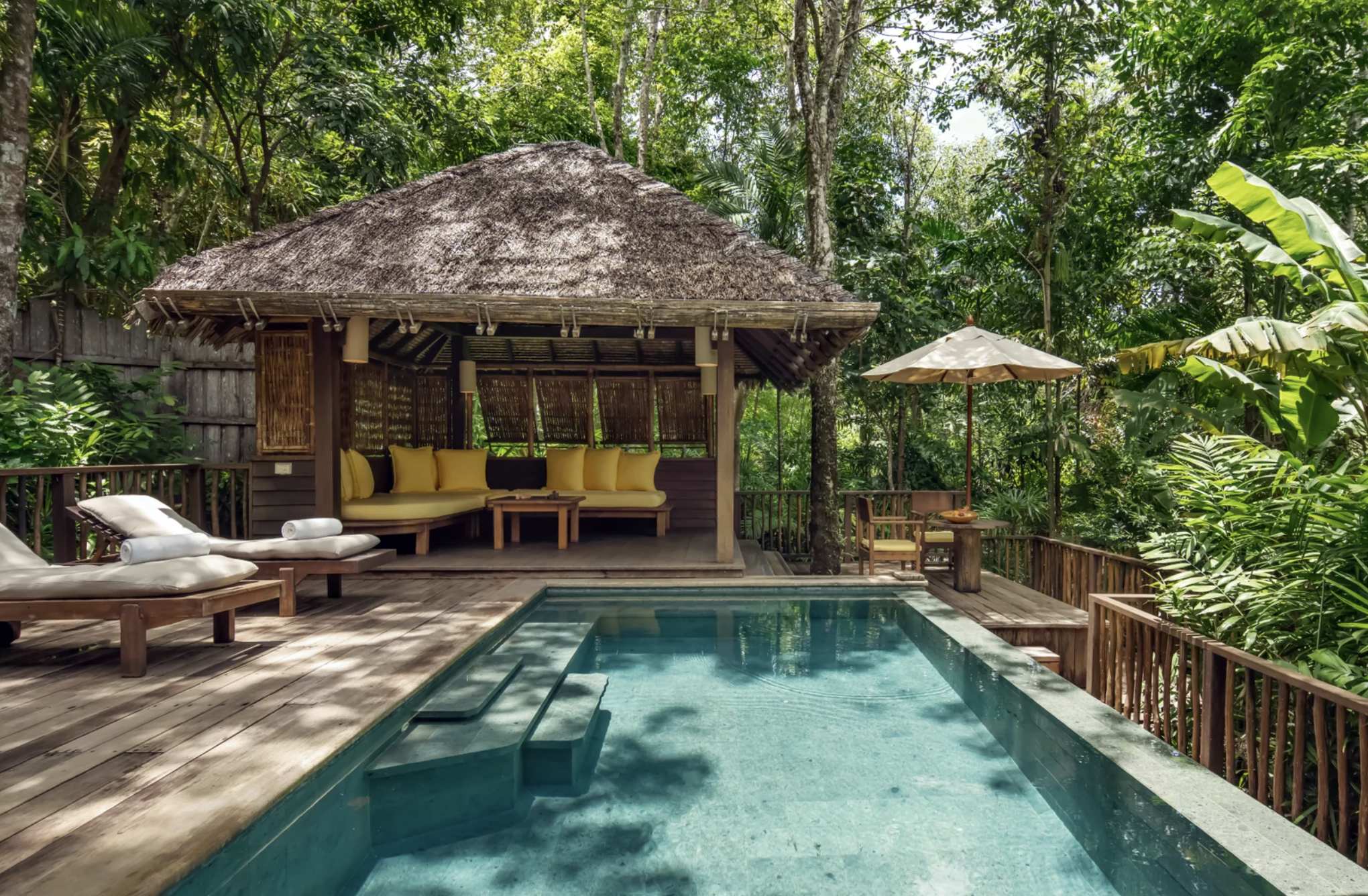
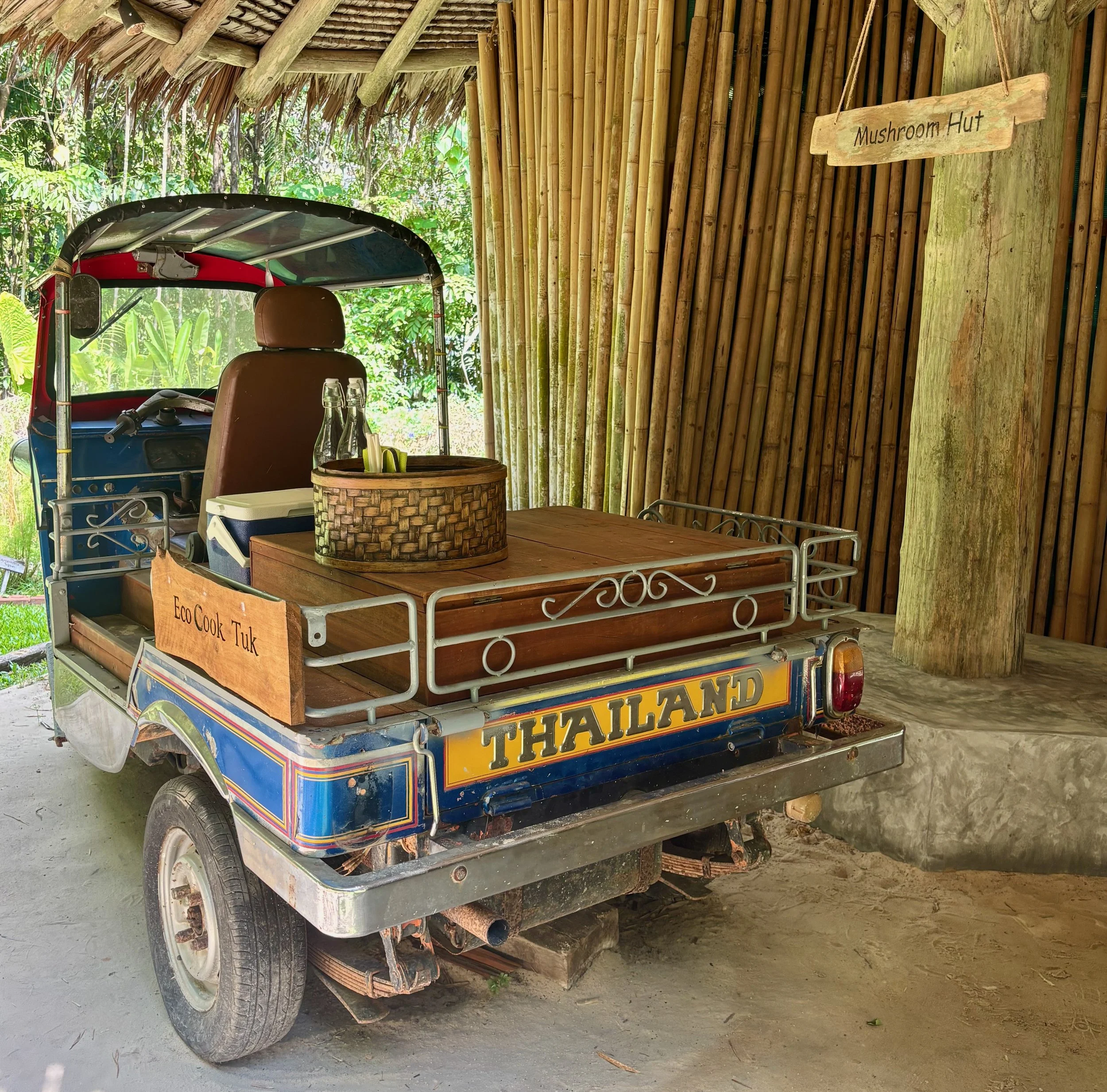
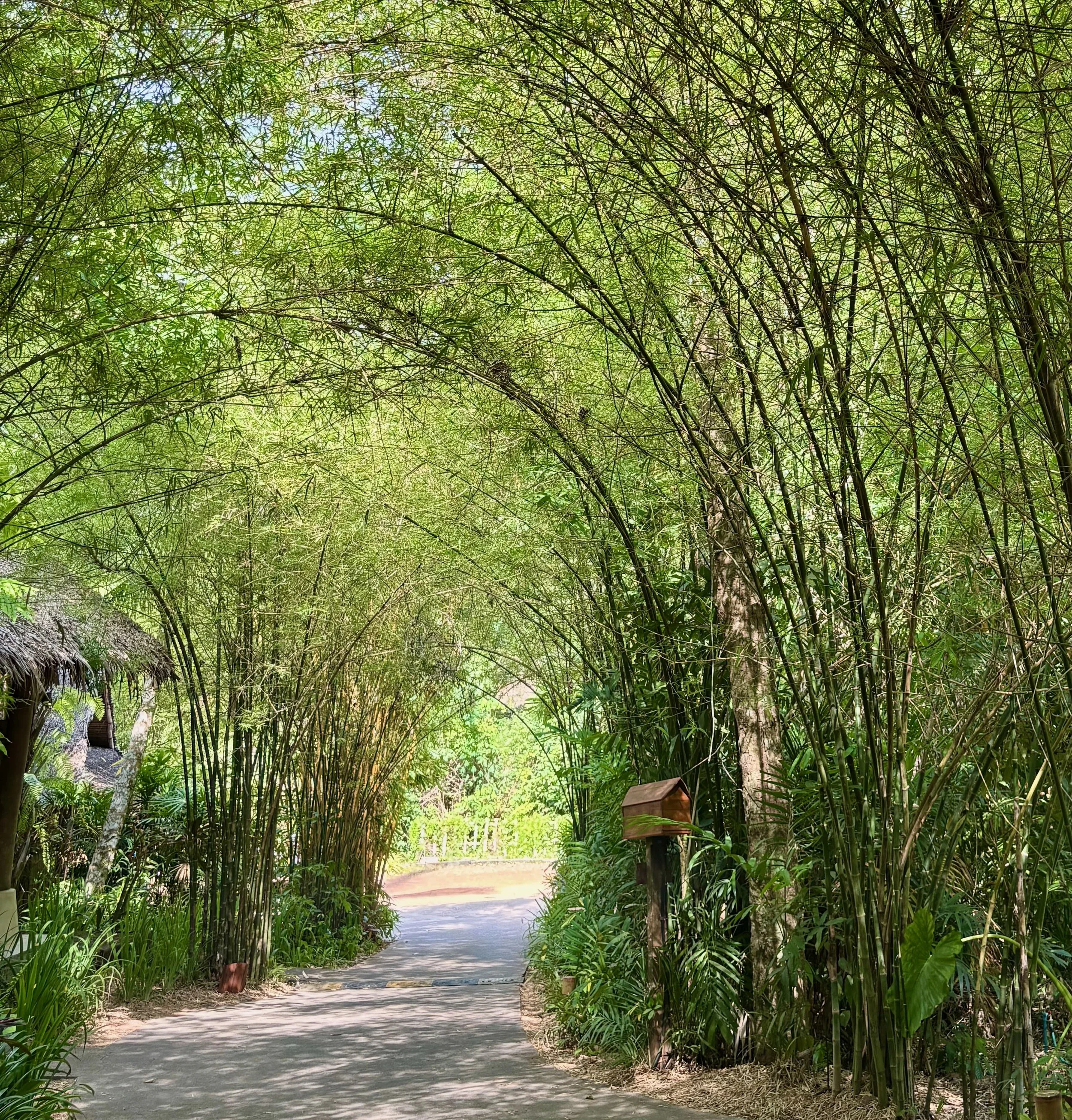
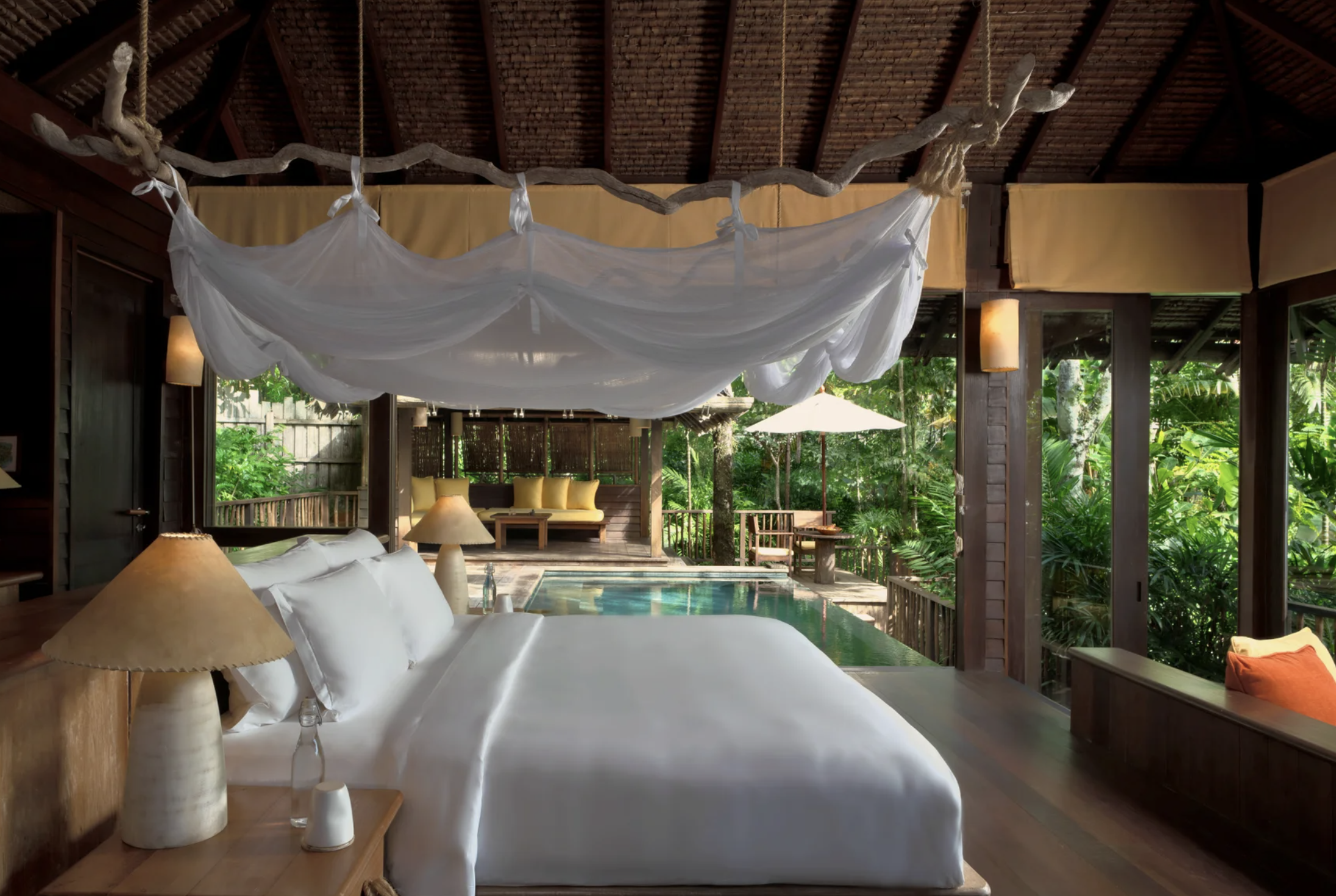
Six Senses sits among the limestone karsts of one of the most dramatic natural landscapes on earth. Its villas, pavilions, and open walkways do not announce themselves against this backdrop — they disappear into it. The reason is a single, radical design decision: every material was sourced locally. Timber from the island. Stone from the region. Thatch, clay, woven fibers — all drawn from the immediate environment and returned to it in the form of shelter. Sitting on the deck of my villa, looking out at Phang Nga Bay, I kept reaching for the word inevitable. Every surface and structural choice felt as though no other material could possibly have been right. That feeling is extraordinarily difficult to manufacture. Here, it wasn't manufactured at all — it was the natural consequence of a single constraint: use what is here.
The Holistic Result of Local Sourcing
When a building's stone, timber, and woven walls all come from the same island, they share an inherent visual and tactile language — shaped by the same climate, the same light, the same soil. The result is coherence that no amount of showroom curation can replicate. You are not aware of moving between designed spaces. You are aware only of being inside a single, continuous experience where the design recedes so the environment can advance.
It is also, I realized, exactly what a Spanish Revival home does at its best. The adobe walls, clay tiles, and timber beams of our Santa Monica project belong to their climate and tradition in the same way Six Senses' materials belong to Koh Yao Noi. When we honored those materials — plastering rather than covering, choosing oak that ages naturally — we were making the same fundamental choice: design in dialogue with the environment, not imposed upon it.
Environment in Dialogue: A Design Philosophy
Design in dialogue has always guided Albina & Co. — the belief that every design decision should begin with the building itself: its proportions, its period, its relationship to its site. Six Senses Yao Noi expanded that principle into something larger. When a building is in dialogue with its environment, it does not exist in isolation from the landscape, climate, and culture surrounding it. The most extraordinary spaces draw from where they stand rather than turning away from it. They feel earned by their location rather than applied to it. Every project at Albina & Co. begins with the same question: what does this space already know about itself?
What I Brought Home
I left Koh Yao Noi with a renewed commitment to material intentionality — asking more rigorously where a material comes from and whether it truly belongs in the space. I also left with a deeper appreciation for restraint. The most powerful moment at Six Senses wasn't a beautifully appointed interior. It was a view of the bay through a completely unadorned opening in a thatched wall — a framed absence that made the landscape the most considered design element of all. Not the loudest gesture, but the most considered one. Not the most impressive material, but the most right one.
On Traveling as a Designer
The right travel is work — not collecting references, but recalibrating your eye. Six Senses Yao Noi didn't give me a mood board. It gave me a clearer articulation of something I already believed: that the best design always answers to something larger than itself — the place it inhabits, the architecture it serves, the people who will live inside it. At Albina & Co., that is where every project begins, and where it always returns.